ads

Free Facebook Likes

Search This Blog

ads

Showing posts with label RT You. Show all posts

Friday, February 24, 2012

How Much Exercise Do I Really Need?

How Much Exercise Do I Really Need?
Most healthy people should aim for at least 30 minutes, five times a week, of moderately intense activity such as brisk walking, plus 10 to 15 minutes or so of strength-training (digging in your garden counts) 2 or 3 days a week. This is enough exercise to help you lower your risk for health conditions like high blood pressure, stroke, coronary artery disease, type 2 diabetes, colon cancer, and osteoporosis, and to prevent the natural loss of muscle mass that slows metabolism and contributes to weight gain in your thirties, forties, fifties, and beyond.

If you’re trying to lose weight, more activity is better. An hour or even 90 minutes of moderate exercise, or 1/2 hour of vigorous activity such as jogging, strenuous aerobics, or fast-paced cycling, is ideal. Of course, anything you do is better than nothing, and consistency counts. Fitting in 30 minutes most days of the week, even in 10-minute bursts, is better than playing the weekend warrior by overdoing it once or twice a week.

If you’re the type that just doesn’t enjoy going to the gym or using a treadmill, choose an activity you enjoy that you can do for 10 to 30 minutes or longer and that raises your heart rate. This could be dancing, playing tennis, chopping enough wood to heat your house for the winter, or lining up strenuous yard work or housework that feels like a workout.

Are Kettlebell Workouts a Shortcut to Fitness?

Could kettlebells really help you burn calories faster than conventional strength training programs? Fitness research suggests…

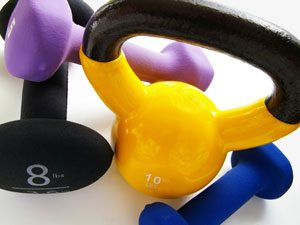
Kettlebells and Dumbbells
Working out with a kettlebell (a weight that resembles a cannonball with a handle attached to the top) burns more calories and builds strength faster than traditional strength training. Gyms across the country are adding kettlebell classes, and many personal trainers incorporate the weights into clients’ workouts — all with the promise of an outsize payoff.

The truth? New research suggests that kettlebells really may get you fitter faster. In a small study from the University of Wisconsin, La Crosse, seasoned exercisers burned nearly 300 calories in a 20-minute workout with the weights — significantly more than they would have with conventional strength training. To avoid back strain, start with a relatively light weight (8 pounds for women, 13 pounds for men).

Friday, October 21, 2011

Secrets of Straight-A Students

Master the basic techniques that top students use to get good grades

Top Student
Everyone knows about straight-A students. We see them frequently in TV sitcoms and in movies like Revenge of the Nerds. They get high grades, all right, but only by becoming dull grinds, their noses always stuck in a book. They’re klutzes at sports and dweebs when it comes to the opposite sex.

How, then, do we account for Domenica Roman or Paul Melendres?

Roman is on the tennis team at Fairmont (W.Va.) Senior High School. She also sings in the choral ensemble, serves on the student council and is a member of the mathematics society. For two years she has maintained a 4.0 grade-point average (GPA), meaning A’s in every subject.

Melendres, now a freshman at the University of New Mexico, was student-body president at Valley High School in Albuquerque. He played varsity soccer and junior- varsity basketball, exhibited at the science fair, was chosen for the National Honor Society and National Association of Student Councils and did student commentaries on a local television station. Valedictorian of his class, he achieved a GPA of 4.4 — straight A’s in his regular classes, plus bonus points for A’s in two college-level honors courses.

How do super-achievers like Roman and Melendres do it? Brains aren’t the only answer. “Top grades don’t always go to the brightest students,” declares Herbert Walberg, professor of education at the University of Illinois at Chicago, who has conducted major studies of super-achieving students. “Knowing how to make the most of your innate abilities counts for more. Infinitely more.”

In fact, Walberg says, students with high I.Q.s sometimes don’t do as well as classmates with lower I.Q.s. For them, learning comes too easily and they never find out how to buckle down.
Hard work isn’t the whole story, either. “It’s not how long you sit there with the books open,” said one of the many A students we interviewed. “It’s what you do while you’re sitting.” Indeed, some of these students actually put in fewer hours of homework time than their lower-scoring classmates.

The kids at the top of the class get there by mastering a few basic techniques that others can readily learn. Here, according to education experts and students themselves, are the secrets of straight-A students.

Set priorities. Top students brook no intrusions on study time. Once the books are open or the computer is booted up, phone calls go unanswered, TV shows unwatched, snacks ignored. Study is business; business comes before recreation.

Study anywhere — or everywhere. Claude Olney, an Arizona State University business professor assigned to tutor failing college athletes, recalls a cross-country runner who worked out every day. Olney persuaded him to use the time to memorize biology terms. Another student posted a vocabulary list by the medicine cabinet. He learned a new word every day while brushing his teeth.

Among the students we interviewed, study times were strictly a matter of personal preference. Some worked late at night when the house was quiet. Others awoke early. Still others studied as soon as they came home from school when the work was fresh in their minds. All agreed, however, on the need for consistency. “Whatever I was doing, I maintained a slot every day for studying,” says Ian McCray, a Middlebury College student from New Jersey.

Get organized. In high school, McCray ran track, played rugby and was in the band and orchestra. “I was so busy, I couldn’t waste time looking for a pencil or missing paper. I kept everything right where I could put my hands on it,” he says.

Paul Melendres maintains two folders — one for the day’s assignments, another for papers completed and graded. Traci Tsuchiguchi, a top student at Clovis West High School in Fresno, Calif., has another system. She immediately files the day’s papers in color-coded folders by subject so they’ll be available for review at exam time.

Even students who don’t have a private study area remain organized. A backpack or drawer keeps essential supplies together and cuts down on time-wasting searches.

Learn how to read. ”The best class I ever took,” says Christopher Campbell, who graduated from Moore (Okla.) High School last spring, “was speed-reading. I not only increased my words per minute but also learned to look at a book’s table of contents, graphs and pictures first. Then, when I began to read, I had a sense of the material, and I retained a lot more.”
In his book Getting Straight A’s, Gordon W. Green, Jr., says the secret of good reading is to be “an active reader — one who continually asks questions that lead to a full understanding of the author’s message.”

Schedule your time. When a teacher assigns a long paper, Domenica Roman draws up a timetable, dividing the project into small pieces so it isn’t so overwhelming.

“It’s like eating a steak,” she says. “You chew it one bite at a time.”

Melendres researches and outlines a report first, then tries to complete the writing in one long push over a weekend. “I like to get it down on paper early, so I have time to polish and review.”

Of course, even the best students procrastinate sometimes. But when that happens, they face up to it. “Sometimes it comes down to late nights,” admits Christi Anderson, an athlete, student-council member and top student at Lyman High School in Presho, S.D. “Still, if you want A’s, you make sure to hit the deadline.”

Take good notes – and use them. “Reading the textbook is important,” says Melendres, “but the teacher is going to test you on what he or she emphasized. That’s what you find in your notes.”
The top students also take notes while reading the text assignment. In fact, David Cieri of Holy Cross High School in Delran, N.J., uses “my homemade” system in which he draws a line down the center of a notebook, writes notes from the text on one side and those from the teacher’s lecture on the other. Then he is able to review both aspects of the assignment at once.

Just before the bell rings, most students close their books, put away papers, whisper to friends and get ready to rush out. Anderson uses those few minutes to write a two- or three-sentence summary of the lesson’s principal points, which she scans before the next day’s class.

Thursday, September 29, 2011

How to Save Your Favorite Shirt

If you are out to dinner at a restaurant, or even if grease splatters on you while you are cooking, use artificial sweetener immediately to blot the stain. The fine powder will absorb the oil. You may have to keep blotting and using more sweetener, but it really works! And artificial sweetener is always handy at any eatery.

Use Recycled Cooking Water to Feed Your Garden

Sources
Baking Soda, Banana Peels, Baby Oil and Beyond


Boiled foods release nutrients of one kind or another, so why pour their cooking water down the drain? Let the water cool, and then use it to give a garden plant or two a healthful drink. But take note: When you cook any of the following, do not add salt to the water because salt is harmful to plants.

Eggs. Hardboiled eggs leave calcium in the cooking water, so use the liquid to water calcium-loving solanaceous garden plants: tomatoes, potatoes, eggplants, peppers, chayote squash, tomatillos.

Spinach. Plants need iron, too — and spinach water gives them not only iron but also a decent dose of potassium.

Pasta. Starchy water will spur the release of plant nutrients in the soil, meaning starch may be better for plants than for you.

Potatoes. Ditto.

Sunday, September 18, 2011

What’s Better for Your Brain: Weights or Cardio?

Find out how your brain can benefit from different types of workouts

cardio exerciseExercise is good for the body (you knew this) and mind (you probably already knew this). But what kind of workout is best to give your brain a healthy boost at the gym? For optimal overall health, you want a mix of both, but aerobic (cardio) exercise is the clear winner when it comes to stopping brain drain.

One fascinating study randomly assigned a group of 59 men and women to either an aerobics-focused program or a stretching and strength-training program. After 6 months, sophisticated brain scans using functional magnetic resonance imaging (fMRI) showed that the aerobically fit adults had significantly more activity in the frontal cortex of the brain, the region associated with executive function (planning and long-term memory storage), as well as the parietal cortex, the seat of spatial orientation — two areas often associated with age-related cognitive decline.

While cardio does increase blood flow to the brain, that’s not the whole reason for aerobics’ impressive effects.

Instead, the researchers believe that many of the positive changes could be attributed to an increase in BDNF, the “Miracle-Gro” brain hormone. The brain that enjoys cardiovascular training, the researchers say, is “more efficient, plastic, and adaptive, which translates into better learning and performance.” Not too shabby for a daily walk around town.

12 Ideas for Healthier, Easier Workouts

Here are the easy ways to motivate yourself and get the most of your workout

Sport shoesIf you are one of the minority of people who regularly goes to a gym for exercise, then congratulations! It means you have the right priorities and terrific discipline. But it's fair to say that at times, even for committed exercisers, motivation often flags, and there are days when it requires a Herculean effort just to put on our workout clothes and walk through the gym doors.

If you're lucky, the sights and sounds of exercise are all you need to motivate yourself to get moving. At other times, you still may not have the slightest urge to get started. For those days, here are some ways to get the most out of your workout.

1. Avoid the mirrors. Many fitness locations line exercise rooms with mirrors to allow you to watch your form as you work out. Yet a study of 58 women found that those who exercised in front of a mirror felt less calm and more fatigued after 30 minutes of working out than those who exercised without staring at their reflection. The national exercise chain, Curves, deliberately designs its small gyms without mirrors so women can concentrate on each other and the workout rather than on how they look. Other gyms are beginning to offer “reflection-free” zones. If yours doesn't, mention the idea--and the study--to the gym manager.

2. Try using aromatherapy oils known to enhance energy, such as rosemary. Mix them with water and store them in a squirt bottle in your gym bag. Give your gym clothing a few squirts before leaving the dressing room so you can smell the oil as you work out. If you're in the midst of a more meditative, slowerpaced workout, such as Pilates or yoga, try lavender oil instead of rosemary.

3. Create your own personal gym mix tapes, CDs or digital recordings, and listen to them as you work out. Researchers from the University of Wisconsin-La Crosse found that people who listen to up-tempo music got significantly more out of their stationary bike workouts. They pedaled faster, produced more power, and their hearts beat faster than when they listened to slow-tempo music or sounds with no tempo. Overall, they worked between 5 and 15 percent harder while listening to the energizing beat. Although the type of music you choose is up to you, pick something with a fast beat that makes you want to break out in dance. You can custom-design your own exercise music to burn to a CD or download to an MP3 player at Internet sites such as www.mywalkingmusic.com or www.workoutmusic.com.

4. Think of someone who irritates you. Then step on the treadmill, stair stepper, stationary bike, or elliptical machine and sweat out your aggression as you run, climb, or cycle. You might even imagine that you are running an imaginary race against this person. You'll get in a better workout--and blast away anger and stress at the same time.

5. Drink a bottle of water or juice on your way to the gym. If you show up for your workout already dehydrated, you'll feel overly fatigued during your session, says Craig Horswill, Ph.D., principal scientist for the Gatorade Sports Science Institute in Barrington, Illinois. “Nearly half of all exercisers are starting their workouts at a real disadvantage--by arriving at the gym already dehydrated,” he says. “When you're dehydrated, you can't work as hard, you don't feel as good, and your mental function is going to be compromised. Consequently, you're not going to get as much out of your workout.”

6. Think you can and you will. So simple, yet so often ignored, positive thinking can help you power your way through a workout. In a study of 41 adults ages 55 to 92, exercisers who thought positively were more likely to stay active than those whose minds often uttered those two evil words: “I can't.” Whenever you find yourself making excuses, mentally put those self-defeating thoughts in a locked cabinet in your brain and replace them with positive messages such as, “I feel great” or “Bring it on.”

7. Turn off the tube when exercising. It's tempting to try to lose yourself in television programming as you slog away on the treadmill or stationary bike. Yet a 1996 study found women worked out about 5 percent harder when they weren't watching TV than when they were. Although your favorite TV show may take your mind off your workout, it also causes you to lose touch with your effort level. You unconsciously slow down or use poor form as you get caught up in what you are watching. If television sets line the workout area, get on the equipment closest to the monitor tuned to C-Span. Sure you'll glance up at the monitor from time to time, but unless you're a complete political junkie, you probably won't get sucked in.

8. Work out with a friend. If you're feeling stale and are thinking of skipping your gym workouts, ask a friend to meet you for a gym date. As you walk or run on the treadmill, you can share stories of your day. Thirty minutes will go by before you know it. You can also encourage each other to work a bit harder. Your friend can also help you find the courage to approach unfamiliar gym equipment, as it's easier to laugh off your foibles when you have a trusted companion nearby.

9. Set a short-term workout goal. We all know that goals help motivate you to work harder, and that the best exercise programs include measurable goals to achieve weeks or months down the road. Sometimes, though, when your motivation is drooping, a goal for what to achieve over the next 30 minutes is really what you need. So pick something achievable: Maintain a sweat for 20 minutes, or cover two miles on the treadmill, or give just your arms a really good strength workout. A target like that gives you focus to get through on even the tough days.

10. Change your routine every three to four weeks. This will keep your body guessing - improving your result - and fuel your motivation. In the weights room, alternate exercises and modify the way you lift weights. If you usually do two sets of 15 reps, complete one set of 15, then increase the weight for another set of 8 reps. On cardio equipment, switch from the treadmill to the stair stepper etc. Mix up your exercise classes as well, switching around from Pilates to aerobic dance to yoga to kickboxing.

11. Slow down. In one American study, participants who lifted slowly - taking at least 14 seconds to complete one repetition - gained more strength than participants who lifted at a rate of 7 seconds per rep. Slower lifting may help increase strength because it prevents you from using momentum or improper techniques.

12. Invent a competition with the person on the next treadmill. If you're on the treadmill and you're bored, glance at the display on someone else's nearby treadmill. If you're walkig at 3.5 miles per hour and he or she is chugging away at 4mph, see if you can increase your speed and catch up, as if it were a race. The other person won't even know you're racing.

Sunday, July 31, 2011

30 Healthy Cholesterol Tips

Tips on managing high cholesterol and keeping your heart healthy

1. Find more ways to walk. Can you walk to the store for milk? Park farther away? Take the stairs? If you can move more, DO! Physical activity is vital to heart health.

2. Eat six or more small meals a day. A large study of British adults found that people who ate six or more times a day had lower cholesterol than those who ate twice a day, even though the "grazers" got more calories and fat!

3. Fix all your sandwiches on whole grain bread. Eating more complex carbs, like whole grain bread and brown rice, can increase HDL levels slightly and significantly lower triglycerides, another type of blood fat that contributes to heart disease.

4. Say cheese! Women who ate a serving a day (about the size of four dice) had higher HDL (good cholesterol) and lower LDL (bad) than those who ate less, according to a study at Wake Forest University School of Medicine in Winston-Salem, North Carolina.

5. No laughing matter. A recent study showed that diabetes patients who watched funny sitcoms for 30 minutes, along with their standard meds, reduced their heart risk substantially: They had about a 26 percent increase in HDL ("good" cholesterol), compared with a bump of just 3 percent among patients in the control group.

6. Brew it better. If you're worried about cholesterol, stick to paper-filtered and instant coffees. Unfiltered coffees, which are typically made with a French press, contain more of a cholesterol-raising substance called cafestol.

7. Make the move to nonfat milk. If you drink whole milk, switch to 2 percent. If you already drink 2 percent, move to 1 percent. If you drink 1 percent, you're ready for nonfat.

8. Start with soup. Studies show that folks who begin their meals with soup end up eating fewer calories by the end of the day without feeling hungrier. Give it a try with a broth-based soup.

9. Bag some barley. Thanks to its impressive stash of soluble fiber, which slows the digestion of food and the rise of blood sugar, barley is much friendlier to blood sugar than rice for most people. And it lowers cholesterol to boot.

10. Start three days this week with oatmeal, a proven cholesterol-reducer. Use the old-fashioned or quick-cooking kind, not instant.

11. Sip a cup of black tea every four hours. Government scientists found that three weeks of drinking five cups a day of black tea reduced cholesterol levels in people with mildly high levels.

Berries12. Berry good news. Adults who ate about a cup of berries a day lowered their blood pressure and raised their HDL (good) cholesterol after eight weeks, according to a new study from Finland.

13. Pay attention to fiber. Studies find that eating 10 to 30 grams of soluble fiber a day -- much more than the average American eats -- reduces LDL about 10 percent. Aim to up your intake slowly though, otherwise you may experience some bloating and flatulence.

14. The use of medication doesn't have to be permanent. If you improve your diet and increase your activity level, you may reduce your cholesterol enough to get off the medication and stay off it!

15. Add half a tablespoon of cinnamon to your coffee before starting the pot. A Pakistani study found that 6 grams cinnamon a day (about 1/2 tablespoon) reduced LDL cholesterol in people with type 2 diabetes by nearly 30 percent.

16. Try turmeric. Small studies have found that curcumin, a component of turmeric, cuts cholesterol. Heat a little oil in a sauté pan, and toss in a tablespoon of turmeric, a dash of salt, and a generous pinch of black pepper (pepper can increase your uptake of curcumin by up to 2,000 percent). Stir for a minute, then add veggies and lean protein for a healthy, sunny dish.

17. Pop edamame as a snack. Just half a cup contains nearly 4 grams fiber, not to mention the soy isoflavones in these soybeans. Consumption of both has been linked to lower cholesterol.

Olive Oil18. Fall in love with olive oil. A study found that people who consumed about 2 tablespoons of virgin olive oil daily for just one week had lower LDL and higher levels of antioxidants in their blood.

19. Put your pizza on a diet. Order a veggie pie with extra vegetables. Or, if you must have meat on your pizza, make it chicken or ham, not pepperoni. Or try clams, shrimp, or anchovies!

20. Practice deep breathing four times a week for two to four minutes. Use this technique when you're faced with a stressful situation to mitigate your body's reactions.

21. Take as prescribed. If you need cholesterol medication, statins are generally prescribed first, but your doctor may also suggest bile acid sequestrants, fibrates or prescription niacin, all of which will help.

22. Make healthy eating easy. If time's an issue, buy "semiprepared" foods. Some examples: boneless, skinless chicken breast; broccoli and cauliflower florets; and bagged salad.

23. Bag the butter. Dip breads in olive oil instead, or try a sterol-based spread. In the kitchen, try replacing butter with olive or canola oil.

24. Make meals picture-perfect. On days when you don't have salad, add a piece of fruit to your lunch. Or better yet, have fruit at lunch and salad with dinner.

25. Get creative with vegetables. Throw frozen veggies (no need to defrost!) into soups.

26. Step to it. Try to get at least 2,000 steps a day just through everyday activities, like vacuuming and gardening. Make it easy and check out a sports store for a pedometer.

27. Bored with your walks? Invite a friend to break up the tedium or try a new route -- both can make for a more enjoyable experience, and time will go much faster.

28. Lower stress levels with an enjoyable hobby. Can't think of one? Jot down your favorite childhood pastimes, then find one you can transfer to your adult life. For instance, if you loved to draw, find a drawing class nearby and sign yourself up!

29. Sprinkle wheat germ or flax-seed (both rich in omega-3 fatty acids) over salads, yogurt, and cereal.

30. Set the alarm on your computer to go off once an hour. This is your signal to get up and take a short, five-minute walk.

Dieting the scientific way

Another year, another attempt to lose weight? Sounds like it’s time to ditch that old diet and try these top new fat-shifting tips instead


Once upon a time, staying a healthy weight was easy. It could be summed up by the phrase “calories in equal calories out”. To lose weight you simply had to practice the reverse of home economics – spend more than you earned. Unfortunately for many, but perhaps not surprisingly, it turns out that people are rather more complicated than bank accounts.


A lot of research has gone into unravelling the intricacies of our personal fat accounts – driven by the dream of winning the billion-dollar prize of an effective fat pill. Some of the findings have been, to put it mildly, counter-intuitive. They also suggest whole new ways of dieting.

To stay a healthy weight, you need a hormone called lepton to work properly. It sends “I’m full” messages from the fat cells up to the brain, where they go, among other places, to the same pleasure centres that respond to sex and drugs like cocaine. Obese people produce plenty of lepton, but the brain doesn’t seem to respond to it properly. Last year, researchers at the Oregon Research Institute scanned the brains of overweight people and found their reward circuits were under-active. They were eating more to try to get the enjoyment they were missing. In other words, the study showed that fat people are actually the opposite of greedy – because they get less pleasure from eating than others do.

There’s a lot of evidence for the fact that most, if not all, of us have a set point around which our weight can vary by about seven to nine kilos, but anything beyond that is a real struggle. This goes for naturally thin people trying to gain weight as well. Making changes is hard, particularly if your body is working against you, because – as the lepton example shows – the whole weight control system is intimately interconnected with our pleasure centres.

So if your body is sabotaging your efforts to lose weight, why not ditch the traditional approaches and try some new methods, based on the latest research, that work with your body rather than against it . . .

The eat-every-other-day diet
Of course you can still follow the well trodden route of cutting calories, and by sticking to around 1500 a day you will lose weight. Other upsides are that the kilos will stay off and that you will become very healthy: the risk of all the big killers – heart disease, cancer, diabetes – will plummet, along with that of allergies, asthma and infectious diseases. The downside is that you will be constantly hungry and miserable. But what if you could get all those benefits without being in a permanent state of semi-starvation?

Well, maybe you can. The trick is to try an “alternate-day” diet. Several years ago researchers at the National Institute on Aging in Baltimore reported that when they gave rats very little food one day and allowed them to eat plenty the next, they showed virtually all the benefits of a permanent calorie restriction diet. The same goes for humans, according to Dr James Johnson.

How does it work? Besides forcing the body to burn fat, it may also trigger hormonal changes, such as tamping up the activity of two anti-ageing genes called SIRT3 and SIRT4. Most people say that the diet takes a bit of getting used to, but is not as grinding as trying to cut back on an everyday basis.
Just-published research from the University of Illinois at Chicago of a ten-week trial on obese patients who followed a form of the alternate-day diet revealed a weight loss ranging from four to 13 kilograms, whereas the researchers expected an average of only two kilograms. Blood pressure, heart rate and cholesterol were also lowered.
Keep cool
Older dieters may remember some-thing called brown fat. Unlike the undesirable white stuff, this was a dieter’s dream. Instead of storing excess energy as fat, brown-fat tissue burned it off to keep you warm – at least in mice. Brown fat fell out of favour because researchers couldn’t find much in humans but now, thanks to the New England Journal of Medicine, it’s back in fashion. The idea is to expose people to cold temperatures. They then make more brown fat and their weight drops. Women kept at 22˚C used up 27 more grams of body fat a day than those at 27˚C. So turn on the air-con.

Check your testosterone level (men only)
If you are a middle-aged man whose middle is spreading, it may not just be that you are exercising less and eating more, but that you are making too much of the female hormone o estrogen.

Although we talk about male and female hormones, we all make both, and we all use testosterone to make oestrogen. This is particularly significant for older men. As we age, we not only make less testosterone, we also turn more of it into o estrogen.

The extra oestrogen encourages more fat to be laid down around the middle – just the place where fat stores are linked with an increased risk of diabetes and heart disease. This sets up a vicious circle. The newly stored fat pumps out more of the enzyme that turns testosterone into o estrogen.

To break the circle, you could exercise to give yourself energy and build muscle – although your reduced testosterone will make that option less appealing. A testosterone supplement, which a few doctors prescribe if your level has become very low, may help. You could also stop drinking because having to clear away regular large amounts of alcohol means your liver is less efficient at getting rid of the extra o estrogen.

Get in the sun without sunblock (or take vitamin supplements instead)
Vitamin D is the new nutrient superstar, linked with lower risk of all sorts of disorders including heart disease, diabetes, multiple sclerosis and rheumatism. And now it looks as if it helps with weight loss, too.

During the summer of 2008, in a small trial of 38, a researcher from the University of Minnesota reported that those with more vitamin D in their blood lost more weight. For every extra nano-gram per millilitre (ng/ml) they lost an extra quarter-kilo.

Other trials, too, have linked higher vitamin D levels with less obesity. But why? All vitamin D experts agree that lots more research is needed – but in the meantime, one interesting theory is emerging from Imperial College London. Because sunlight is the main source of vitamin D, a low level of vitamin D may make the body think that colder weather is on the way, and therefore that it has to store more food.

There’s also much debate about how much you should be taking. The official recommended daily allowance is 200 IU (international units) but many experts are now suggesting 1000 or even 2000. A daily dose of 1000 over several months would raise your blood level by 10ng/ml meaning you could lose an extra two kilos on top of what you’d expect to on your diet.

Be plump and proud
But is being overweight necessarily unhealthy in all cases? A ground-breaking study in The Lancet in 2007 found that about 30 percent of people classed as obese (ie, with a body mass index of 30 or more) were actually metabolically very healthy, with low cholesterol, blood pressure and blood sugar.

They were also responsive to insulin – which isn’t supposed to be true about fatter people.

In short, one in three of those being endlessly cajoled to lose weight may not need to. It may, in fact, be actively harmful. Researchers from the University of Montreal compared the effect of a low-calorie diet on a group of metabolically healthy obese people with a group who were obese and at risk. They found insulin resistance (a marker for diabetes) improved by 26 percent in the at-risk group but it got 13 percent worse among the metabolically healthy.

So even if your BMI is officially dangerously high but you eat pretty well, take regular exercise and feel fine, then have your metabolic markers checked out: if they are healthy, then maybe just enjoy your extra kilos!

Wednesday, July 13, 2011

8 Connections Between Diet and Sleep

What you eat or drink in the hours and minutes before bed may make the difference between a restful slumber and a fitful night of tossing and turning


Diet and sleep1. Eating too much or too little can disrupt sleep. A light snack at bedtime can promote sleep, but too much food can cause digestive discomfort that leads to wakefulness.

2. Alcohol is a double edged sword. Small amounts of alcohol can help you to fall asleep. But as the body metabolises the alcohol, sleep may become fragmented. Alcohol makes insomnia worse and impairs rapid eye movement (REM) sleep, the time when the body is in its restorative phase. It can also dehydrate you, leaving you tired the next day.

3. Caffeine can disturb sleep. For some people, any food or beverage with caffeine in it can disturb sleep. If you are sensitive to caffeine, avoid it in the afternoon and evening.

4. Cut the fat. If you have a high-fat meal in the evening or eat foods that cause you indigestion and heartburn, your sleep can be disturbed.

5. Do not eat late at night. Sufferers from heartburn or acid reflux should avoid late, heavy meals that delay the emptying of the stomach. Lying down with a full stomach encourages acids and gastric juices to flow up into the esophagus, causing heartburn that disturbs sleep.

6. Drinking fluids too close to bedtime can cause problems. Avoid fluids after dinner to reduce the need to go to the bathroom during the night.

7. Milk and honey promote sleep. Milk contains tryptophan, an essential amino acid that is a natural dietary sleep inducer. Tryptophan increases the amount of serotonin, a natural sedative, in the brain. This is why so many folk remedies include warm milk with a spoonful of honey, a simple sugar. (Carbohydrates facilitate the entry of tryptophan into the brain.) A turkey sandwich is a sleep-inducing combination of tryptophan and carbohydrates. A banana with milk gives you vitamin B6, which helps to convert tryptophan to serotonin.

herb tea8. Helpful herbs. Many herbs are said to be useful for inducing sleep; one of the most popular and reliable is valerian. Its use as a sedative has been supported by research demonstrating that active ingredients in the valerian root depress the central nervous system and relax smooth muscle tissue. Valerian that is brewed into a tea or taken as a capsule or tincture can lessen the time it takes to fall asleep and produce a deep rest. It does not cause dependency or a 'hungover' feeling. It is not recommended for use during pregnancy or breastfeeding, as it has not been studied for these conditions. Other remedies suggested for sleep problems include teas made of chamomile, hops, lemon balm and peppermint, but there is not much evidence that they work.

7 Things that are Secretly Making You Gain Weight

Not sure why your jeans suddenly feel tighter? Choices you make in your everyday life might be secretly causing you to gain weight. Here's how to spot seven diet saboteurs

Crash Diet1. Fancy coffee-shop beverages
Your daily treat from the corner coffee shop may be adding a significant amount of calories to your diet. For example, a Grande Strawberries and Crème Frappuccino with whole milk and whipped cream at Starbucks is 370 calories and 15 g of fat. Instead, choose a regular coffee. Alone, it has no calories, but even with cream and sugar it’s a much better choice: You’ll add 24 calories and 3 g of fat per tablespoon of cream, and 16 calories per teaspoon of sugar. Make this swap once a week and you’ll cut 17,160 calories a year, which adds up to almost 5 pounds.

2. Eating on the run
Most of us have caught ourselves walking and eating, or stuffing down a meal to get to our next commitment on time. “Eating on the run often leads to eating too quickly for your hunger and satisfaction signals to keep up,” says Mary Bamford, registered dietitian. What’s too fast? According to Bamford it means taking less than 20 minutes to eat a meal.

Instead, sit down (eating in the car while driving doesn’t count) and slow down. “If you eat in a hurry and rely on your hunger signals to know when you’ve had enough, you have to overeat to feel satisfied,” she says. “And then 30 to 60 minutes later, if you are paying attention, you may realize you are stuffed,” she adds. So stop walking and munching, and make time to savour your meals.

3. Overindulging on weekends
Researchers have found that people don’t realize they eat markedly more on weekends, particularly on Saturdays, when they tend to consume more fat. Those extra calories can add up quickly.

To combat overindulging on Saturday and Sunday, pay attention to portion size, weigh yourself daily (or on Fridays and Mondays only) and watch your alcohol intake, which provides empty calories and lowers your food inhibitions.

4. Portions that are too large
It’s a simple fact: Eat less and you’ll lose weight. There’s good evidence that over the past 50 years, restaurant portions have “super-sized,” and our waistlines have grown along with them. We’ve become accustomed to eating larger servings to the detriment of our health.

To combat this habit, use a smaller plate for your meals. Less space on the plate means automatic portion control. And when ordering or buying food, choose the smallest size of any high-calorie items.

5. Crash diets
Dieting makes food an enemy, not a source of sustenance and well-being. So-called yo-yo dieting—losing weight, putting it back on, losing it again and so on—is bad for your health. If you suddenly reduce your food intake, you body, because it is designed for survival, will slow down your metabolic rate in order to store energy more efficiently. This is why people on a diet crave snacks like chocolate, which gives a quick boost to their energy levels, and why weight loss slows down dramatically after the first couple of weeks.

To reach and maintain a reasonable body weight, you need a balanced diet full of nutrients to prevent disease and to ensure optimal energy and psychological well-being

6. Skipping meals
“Skipping meals can have a negative impact on your metabolism,” says Toronto nutritionist Aviva Allen—your body might start storing extra fat in anticipation of more missed meals. Instead of eating less, consume small, nutrient-dense snacks and meals more often – every three hours is ideal – and try not to eat after seven o’clock at night, when your metabolism is at its slowest.

Eating often also makes it easier to stay on track beacause denying yourself food isn’t a sustainable practice. “The biggest mistake is to think of your diet as a temporary event to reach a specific weight-loss goal,” says Allen. “If you plan to return to your old habits once you’ve reached your goal, the weight will quickly return.”

7. Boring workouts
No matter how good the fitness plan, sticking with the exact same routine day after day is hard—and discouraging. In his first book, 5-Factor Fitness, Hollywood trainer Harley Pastnernak recommends a different workout for every day of the week, each focusing on a different body part. Whether you vary the number of reps you do or make a switch from cardio to resistance training, it’s important to vary your routine enough so you don’t get bored. “At least one thing should be different daily,” Pasternak suggests.

Tuesday, July 5, 2011

5 Drinks to Help You Lose Weight

Don't drink your calories. Instead drink these low-calorie drink options.

green tea
The secret to losing weight isn't just watching what’s on your plate; it’s also about watching what’s in your glass. Popular soft drinks, fruit juices, and energy drinks can be loaded with added sugars and carbohydrates that can sabotage your weight-loss strategy. Here are five tasty ways to drink up without packing on the pounds.


1. Water
We all know this one, but it’s important to remember that water is the single best choice for effective weight loss. Whether it’s still or sparkling, aim to make water your go-to beverage choice. Think water is boring? Try adding fresh lemon slices, lime, cucumber, and even a slice of tomato to add flavor without adding many calories.

2. Vegetable juice
Whether in a can, bottled, or homemade, vegetable juice is an excellent way to get the fiber and nutrients your body needs to fuel your weight loss. If you can find a low-sodium variety, even better. The veggies will keep you fuller longer and the tangy flavor will keep your taste buds happy.

3. Unsweetened tea
Green tea has been proven to help boost metabolism and speed up weight loss. Try it hot or iced with a bit of honey for a low-sugar sweet drink. Don’t forget black and oolong teas, too! Both are filled with antioxidants, which can help rid your body of toxins.

4. Black coffee
A morning cup of joe or an afternoon iced coffee can help spur your weight loss by providing a boost of caffeine that suppresses hunger. Also, coffee has been shown to stimulate parthenogenesis, which heats up the body and boosts metabolism. Just be careful about what you add to your coffee — stick to skim milk and very little sugar.

5. Skim milk
Milk is an excellent source of lean protein, vitamin D, and calcium that can help build your muscles and keep your bones strong. Opt for low-fat or skim milk for all of the vitamins without the added fat. If you are feeling indulgent, add a little chocolate — low-fat chocolate milk is a great option for post-workout muscle recovery.

12 Ways to Jump-Start Your Metabolism

A healthy metabolism ensures the body convert or use energy to maintain all the working parts of the body. Kick-start your weight loss with these easy-to-follow tweaks to your daily life.


1. Use interval training to rev up your workout. Walk for the same amount of time at the same intensity day in and day out and your body will get as bored with your workout as you do. Throw in some variety with interval training, which involves changing the intensity of your workout throughout your exercise session. Every 5 minutes of your walk, jog for 1 minute. Every 5 minutes of your bike ride, shift into a higher gear and pedal hard for a minute. If you swim, speed up every other length. You'll burn more calories in the same amount of time.

2. Fidget. People who drum their fingers or bounce their knees burn at least 500 calories a day.That adds up to losing 1 lb a week.

3. Keep a small squeeze ball with you and grip and squeeze it frequently during the day. It's one of the few exercises you can do at any time. You'll build up the muscles in your hands – and muscle, wherever it is, burns a lot of calories.

4. Don't starve yourself. Cutting out too many calories can backfire in more ways than one. Try to subsist on morsels and your metabolism will slow down so much that you'll not only stop losing weight, but you'll be lucky if you can peel yourself off the couch.

5. Put five rubber bands around your wrist every morning. That's how many 16-ounce bottles of water you should drink during the day to rev up your metabolism, helping to burn more calories. At least, that's what German researchers found when they got 14 participants to drink about 500 ml of water. The volunteers' metabolic rate – or how quickly they burned calories – jumped a third within 10 minutes of drinking the water and remained high for another 30 or 40 minutes. The researchers estimated that, over a year, increasing your water consumption by 1.5 litres a day would burn an extra 17,400 calories, or about 2.25 kg (5 lb) worth. Since much of the increased metabolic rate is due to the body's efforts to heat the liquid, make sure the water you're drinking is icy cold.

6. Turn up the heat with hot peppers. Some studies show that very spicy foods can temporarily increase your metabolism. Specialist grocers often stock many different kinds of peppers. Buy one type a week and add some to various meals. Spice up your scrambled eggs with minced jalapeño, add a little fire to beef stew with half a Scotch bonnet pepper.

7. Exercise outside. Maybe it's the fresh air, maybe it's the sunshine, but something about exercising out in the open makes you walk or run faster than doing the same exercise in the gym.

8. Eat five small meals throughout the day instead of three large meals. You might think you should eat less often if you want to lose weight, but that's just not the case. By eating every few hours, you keep your metabolism fired up and ensure it doesn't slow down between meals in order to hang on to calories. A "meal" can be as small as a cup of soup.

9. Sip a couple of cups of coffee throughout the day. Studies find that the caffeine in coffee increases the rate at which your body burns calories. This does not mean, however, that you should order a fancy calorie-packed frappuccino. And skip the espresso if it makes you toss and turn at night.

10. Don't worry if you've been yo-yo dieting. There's a myth that if you've spent your life losing and gaining the same 10 to 20 lb, your metabolism gets out of kilter and ends up slowing right down. Don't believe it. When researchers reviewed 43 studies on the topic, they found no difference in the metabolic rates of yo-yo dieters compared to those of everyone else.

11. Walk with intent – and intensity. Burn more calories in the same amount of time with these strategies:

1. Swing your arms when you walk. You'll burn 5 to 10 per cent more calories.
2. Wear a weighted vest – another great way to burn calories. But leave the hand and ankle weights at home. They throw you off balance and could result in injury.
3. Walk on grass, sand or a gravel path instead of the road. It takes more muscle power to glide smoothly over these uneven surfaces (especially sand) than over asphalt.
4. Use walking poles. A U.S. study found that you get a much more intense workout than you would without the poles.
5. Walk along the shore of a river or lake with your ankles in the water. The resistance burns more calories and gives your muscles an added workout.

12. Increase the protein in your diet. There is some evidence that if you increase your protein intake to the upper end of the recommended range (roughly 20 per cent of overall calories), the amount of energy you expend at rest will remain the same even while you're losing weight. Normally, as you lose weight, your body adjusts and you burn fewer calories at rest.

Thursday, June 30, 2011

What HR People Won’t Tell You About Your Resume and Job Interview

Human resource pros tell you some resume tips and shared what to do—and what not to do—when meeting to discuss an employment opportunity.

job interview
1. “When it comes to getting a job, who you know really does matter. No matter how nice your résumé is or how great your experience may be, it’s all about connections.” –HR director at a health-care facility


2. “If you’re trying to get a job at a specific company, often the best thing to do is to avoid HR entirely. Find someone at the company you know, or go straight to the hiring manager.” –Shauna Moerke, an HR administrator in Alabama who blogs at hrminion.com

3. “People assume someone’s reading their cover letter. I haven’t read one in 11 years.” –HR director at a financial services firm

4. “We will judge you based on your e-mail address. Especially if it’s something inappropriate like kinkyboots101@hotmail.com or johnnylikestodrink@gmail.com.” –Rich DeMatteo, a recruiting consultant in Philadelphia

5. “If you’re in your 50s or 60s, don’t put the year you graduated on your résumé.” –HR professional at a midsize firm in North Carolina

6. “There’s a myth out there that a résumé has to be one page. So people send their résumé in a two-point font. Nobody is going to read that.” –HR director at a financial services firm

7. “I always read résumés from the bottom up. And I have no problem with a two-page résumé, but three pages is pushing it.” –Sharlyn Lauby, HR consultant in Fort Lauderdale, Florida

8. “Most of us use applicant-tracking systems that scan résumés for key words. The secret to getting your résumé through the system is to pull key words directly from the job description and put them on. The more matches you have, the more likely your résumé will get picked and actually seen by a real person.” –Chris Ferdinandi, HR professional in the Boston area

9. “Résumés don’t need color to stand out. When I see a little color, I smirk. And when I see a ton of color, I cringe. And walking in and dropping off your resume is no longer seen as a good thing. It’s actually a little creepy.” –Rich DeMatteo

10. “It’s amazing when people come in for an interview and say, ‘Can you tell me about your business?’ Seriously, people. There’s an Internet. Look it up.” –HR professional in New York City

11. “A lot of managers don’t want to hire people with young kids, and they use all sorts of tricks to find that out, illegally. One woman kept a picture of two really cute children on her desk even though she didn’t have children [hoping job candidates would ask about them]. Another guy used to walk people out to their car to see whether they had car seats.” –Cynthia Shapiro, former human resources executive and author of Corporate Confidential: 50 Secrets Your Company Doesn't Want You to Know

12. “Is it harder to get the job if you’re fat? Absolutely. Hiring managers make quick judgments based on stereotypes. They’re just following George Clooney’s character in Up in the Air, who said ‘I stereotype. It’s faster.’” –Suzanne Lucas, a former HR executive and the Evil HR Lady on bnet.com

13. “I once had a hiring manager who refused to hire someone because the job required her to be on call one weekend a month and she had talked in the interview about how much she goes to church. Another candidate didn’t get hired because the manager was worried that the car he drove wasn't nice enough.” –HR professional at a midsize firm in North Carolina

14. “Don’t just silence your phone for the interview. Turn it all the way off.” –Sharlyn Lauby, HR consultant in Fort Lauderdale, Florida

15. “If you’ve got a weak handshake, I make a note of it.” –HR manager at a medical-equipment sales firm

16. “If you’re a candidate and the hiring manager spends 45 minutes talking about himself, the company or his Harley, let him. He’s going to come out of the interview saying you’re a great candidate.” –Kris Dunn, chief human resources officer at Atlanta-based Kinetix, who blogs at hrcapitalist.com

24 Ways to Brighten Your Morning

Wake up on the right side of the bed and ease into your day with a positive, calm attitude

The Wake-Up Routine

The morning is probably no one's favorite part of the day, particularly if you stayed up the night before to watch Leno or Jaws for the seventeenth time. Remember: Stress and anxiety wreak havoc on your immunity. Enter your day happy and relaxed, and you greatly increase your chances of a healthy, productive day.

1. Go to sleep with your blinds or curtains halfway open. That way, the natural light of the rising sun will send a signal to your brain to slow its production of melatonin and bump up its production of adrenaline, a signal that it's time to wake up. When the alarm goes off, you'll already be half awake. Even better: Go to bed early enough so that waking up when the sun shines through your window still gives you the recommended seven hours of shut-eye. If you maintain this routine, it's likely that you can start relying on your biological clock rather than an alarm clock.

2. Set your alarm 15 minutes earlier. This way, you don't have to jump out of bed and rush through your morning. You can begin your morning by lying in bed, slowly waking up. Stretching. Listening to the news headlines. Mentally clicking off what you're going to wear, what you're going to do, what you're going to have for breakfast. It's just as important to prepare yourself mentally as physically for your day. These few minutes in bed, before anyone else is up, are all yours.

3. Stretch every extremity for 15 seconds. Try this even before you open your eyes. Lift your arm and begin by stretching each finger, then your hand, then your wrist, then your arm. Then move on to the other arm. Then your toes, feet, ankles, and legs. Finally, end with a neck and back stretch that propels you out of the bed. You've just limbered up your muscles and joints and enhanced the flow of blood through your body, providing an extra shot of oxygen to all your tissues.

4. Stick a chair in the shower and sit in it. Use one of those plastic chairs you can buy at any hardware store. Let it warm up under the spray for a minute, then sit in it and let the spray beat on your back. It's simultaneously relaxing and energizing, like getting a water massage. After a couple of minutes, you can swing the chair out of the way and commence withwashing.

5. Read a motivational quote every morning. This can provide a frame for the day, a sort of self-talk that keeps you motivated in the right direction as opposed to the negative thinking of the morning news. Another option: Use a motivational mantra that provides a meditation-like burst, or read or recite a poem that helps you focus. A good one to use: Rudyard Kipling's "If."

6. Take a vitamin. Keep a multivitamin out on the kitchen counter right by the coffeepot so you remember to take one every morning. More than 20 years of research led to a major recommendation in one of the country's premier medical journals suggesting that every American take a multivitamin as part of a healthy lifestyle.

7. Eschew any decisions. For truly relaxing mornings, reduce the number of choices and decisions you make to zero. Go about this two ways: First, make your morning decisions the night before: what clothes to wear, what breakfast to eat, what route to take to work, and so on. Second, routinize as much of your morning as possible. Really, there's no need to vary your breakfast, timetable, or bathroom ritual from one morning to the next.

8. Cuddle with your kids. Few things are more stressful in the morning than waking up an overtired fifth grader or a snoring high schooler. Yet this is one of the few times you can catch your child still vulnerable. Sit on his bed and gently smooth his hair as you softly waken him. Or, if you're dealing with a very young child, lie beside him and gently hug him awake. Such a moment will send a quiet surge of joy through your entire day and will become all too rare in all too short a time.

9. Spend 5 to 10 minutes each morning listening to music or sitting on the deck or porch just thinking. This allows the creative thinking that takes place during the night to gel and form into a plan of action, grounding you for the day.

10. Wake to the smell of coffee. Really great coffee. Buy the absolute best coffee you can afford -- fresh beans are preferred -- and put twice the amount you've been using into your coffee maker, the one you bought specifically because it has an alarm that can be set to start brewing times. The strong scent of strong coffee will pull you out of bed like a fishhook in the back of your pajamas. Plus, if you're going the caffeine route, morning is the best time for it. Caffeine is a central nervous system stimulant that acts in many ways like other stimulant drugs such as amphetamines, waking you up and increasing your muscular activity. Even better: A study of 18 men found that caffeine improved clear-headedness, happiness, and calmness, as well as the men's ability to perform on attention tests and to process information and solve problems.

11. Brush your tongue for one minute. There's no better way to rid yourself of morning breath and begin your day minty fresh and clean. After all, more than 300 types of bacteria take up residence in your mouth every night. You think a quick brush over the teeth is going to vanquish them all?

12. Take a baby aspirin. There. You've just significantly reduced your risk of a heart attack. In one study of 220,000 doctors, those who took an aspirin every day for five years slashed their heart attack risk nearly in half. Of course, check with your doctor first to make sure this is okay for you.

Monday, June 27, 2011

New Razors With an Edge

Razors are a multi-billion-dollar industry. Some 70
per cent of men and 90 per cent of women who shave
typically use a razor; the rest use electric shavers. That's
big business, and likely the reason there's always a new razor
in shops, promising a super-close shave.
The latest products from the top two manufacturers are
battery-operated vibrating razors: the Schick Quattro Power,
which has four blades in the cartridge head, and Gillete's
Venus Vibrance for women and five-bladed Fusion Power
for men. These razor lift hairs, making them easier to cut, says Eric Kraus of the Gillette Company.

Down the road, look for diversified products, such as electrics that allow for precision shaping, following the rise in popularity of goatees, says Kristin Branch of Remington electric shavers. Companies are always looking to make razors more comfortable, while developing new mechanisms that allow maximum contact. "Each product we introduce is a step up in performance. And when we release that product, there's another in development," says Kraus.

A Guy's Guide to the Perfect Shave

For the closest shave, nothing beats a straight-edge razor. But if you don't know how to use one, you could get hurt. For the next best thing, try these tips from Javier Jaime of Paul Labrecque Gentleman's Salon and Barber Shop in New York:

Wash your face with an alcohol-free cleanser.
Open pores by applying a hot towel to the face, or shave after a hot shower.
Rub shaving cream in a circular, upward motion to lift hairs, so they're easier to cut.
Go with the grain, moving from the side towards the nose, then to the chin. Next, go against the grain. Don't shave one area more than three times - it irritates the skin.
Finish with splash of cold water, then alcohol-free aftershave. Replace a razor after three shaves. Rinse it in hot water after use and store upright, never face-down - that helps bacteria grow

A Gentler Way to Keep Kilos Down

You may have thought yoga was strictly for New Age mystics. Well, think again. Us research shows 45- to 55-year-old who regularly practice it are better able to fight "middle-age spread, while those already overweight are more likely to slim down.

Interestingly, few people practice yoga vigorously enough to burn many kilo-joules doing it. The study speculates that yoga instead makes you more "body aware" and perhaps teaches you discipline that you can apply in other areas.

The study has these yoga tips:
1. Find an edge where you are challenged but not overwhelmed.
2. Pay more heed to the internal experience than outer performance.
3. Try to become more aware of even your smallest movements.
4. Note what you are saying to yourself as you do yoga - be sure to appreciate your own efforts.

ads