ads

Free Facebook Likes

Search This Blog

ads

Saturday, December 1, 2012

Holiday Lights, ‘Gangnam Style’

“Gangnam Style,” the dance hit by Korean pop star PSY, has become perfect fodder for video reenactments worldwide, from dancing Thai prisoners to Ellen Degeneres’ JCPenney takeover to dancing lights. Yes, dancing lights.

 Texan John Storms “choreographed” his holiday light display to the record breaking hit. In a clip posted on YouTube (which has over 700,000 views), twinkly Christmas trees, snowflakes, wreaths and icicle lights blink on and off in sync with the music.

 After watching the video I couldn't stop wondering how, and why, Storms did it. So, I caught up with him to get some answers. For the past few years, he’s been decking out his family home in a spectacular menagerie of holiday lights and setting the entire display to music. He chooses tunes based on what his family likes and what’s popular. This year’s show has about a dozen songs.

 Storms started the extravagant displays as a way to continue the “aww factor” of his childhood and share it with others–and, it’s working. Storms said kids dance in the street and families tell him his “dancing house” has become part of their holiday tradition. “We do it to bring a moment of joy to the kids,” he said.

Storms lights up for the first time on Thanksgiving Eve and keeps it going until New Years Eve. Each year, he stocks up on cheap decorations during holiday sales, starts song selection and sequencing in September, then dresses up the house and tests the lights in November.

As a software quality assurance engineer, using Light-O-Rama software to sequence the lights and music isn't too tricky (though, some songs are harder than others), Storms said, and he makes his work available for other hobbyists to use in their own displays. He breaks each song down into foreground, background, vocals, etc. and then programs the lights accordingly. Each piece of the display, be it a tree or a light strand, is on its own “channel” that Storms can turn up, down, fade up or fade out.

For a technical “how-to” of the show, check out Storms’ site. To see more light shows, visit his YouTube page.

Wednesday, August 8, 2012

How to Eat Well for Less

Buy the best when it makes a difference, and fill the rest of your grocery cart with values.


Save on: Wine

Here's why: Consumers and wine experts liked inexpensive bottles—think Barefoot, Trader Joe’s Charles Shaw, Black Box—just as much as their pricey counterparts in a large-scale blind tasting.

Splurge on: Pasta
Here's why: Generic and bargain-basement pastas often end up as a mushy mess. You don’t have to spend much more to get chefs’ picks like Barilla or DeCecco, which are used in top restaurants.

Save by buying: Everyday oil
Here's why: When oil is going to be cooked, you can usually substitute vegetable or regular olive oil (even if the recipe calls for extra-virgin). High heat destroys much of the taste.

Splurge on: Extra-virgin olive oil
Here's why: Fifty percent of the olive oil sold in the United States may be adulterated with cheap filler oils. Ideally, taste before you buy, and check for a regional seal of certification on the bottle.

Save by skipping: Bottled water
Here's why: That idyllic blue stream on the label likely has nothing to do with your drink: 49 percent of bottled water in the United States comes straight from purified municipal tap water. Instead, use a simple home filter.

Splurge on: Honey
Here's why: You don’t need to go for a wildflower artisanal blend, but carefully check the label. Often the cheap “honey” in a bear squeeze jar is mixed with corn syrup.


Save by skipping: Hamburgers
Here's why:
Preformed frozen burgers cost more than plain ground beef—and you can make patties yourself in less than ten seconds each! Plus, E. coli might be more prevalent in the frozen patties.

Splurge on: Coffee
Here's why:
Consumer Reports’ two best supermarket coffees (Gloria Jean’s and Newman’s Own) cost about $13.50 a pound but scored significantly better on taste than $8-a-pound brands.

Save by buying: Frozen produce
Here's why:
It’s cheaper than out-of-season fresh produce and is also often higher in nutrients and better tasting because it’s frozen right after picking.

Splurge on: Chocolate
Here's why:
One-dollar bars combine 20-plus ingredients to create a bar-shaped amalgam of brown chemicals. For $2 more, you could get real dark chocolate.

Save by skipping: Specialty baking mixes
Here's why:
Consumer Reports’ taste tests prove that Duncan Hines brownies are just as showstopping as ones made from pricier gourmet mixes.


Splurge on: Vanilla extract
Here's why: “Never use the artificial stuff!” says Susan Reid, editor of The Baking Sheet. “It has one chemical flavor note trying to make up for over 200 flavor notes found in true vanilla.”

Save on: Cheese
Here's why:
If you’re melting or mixing the cheese with other ingredients, go cheap! Save the $20-per-pound artisanal triple-crèmes for a special cheese plate.

Save by skipping: Light juices and light coconut milk
Here's why:
To make reduced-calorie versions of these products, companies simply add water (and maybe artificial sweetener or thickener). Buy the regular version and water it down yourself.

Monday, July 9, 2012

Vice Advice: I Quit Smoking. Now What?

What's the Damage?
Smoking can take a serious toll on your health, but quitters may bounce back more quickly than you think. Here, the truth about the damage done, and the repair plan to follow now.


What's the Damage?

First, congrats on kicking the habit. Breaking an addiction to the nicotine in tobacco is not easy. With each smoke-free year that passes, you lower your odds for heart disease, serious breathing problems, and cancers of the lungs, mouth, throat, esophagus, bladder, and more. But you may not be in the clear just yet. Your heart and lungs remain at higher risk of disease than that of a nonsmoker for up to 20 years after you quit.

Can You Undo It?

Absolutely. You’ll see immediate health benefits shortly after quitting, but the full benefits take years to reap. Heart disease risk drops 50 percent within a year after kicking the habit, but it’s not until 15 years later that your risk of heart disease and stroke fall to the level of someone who’s never smoked. As for lung cancer: After 10 years smoke-free, your risk is about one-third to one-half that of continuing smokers; it falls to that of someone who’s never smoked within 20 years.

Even better: If you take these additional steps to improve your health beyond staying smoke-free, you can accelerate the recovery and end up even more immune to the diseases linked to smoking.

1. Be vigilant.
Habits and addictions do not die easily. Even if you’ve been smoke-free for years, it might take just one weak moment to reignite your habit. Always be mindful of the benefits of not smoking, and the self-respect you’ve earned in kicking the habit, and don’t let yourself be tempted.

2. Stay away from secondhand smoke.
Passive smoking nearly doubles your odds of a heart attack—and may be even more risky for former smokers whose lungs and cardiovascular systems are still recovering. Avoiding smoke at home, work, and when you’re out socializing is the biggest preventive step a former smoker can take, say Harvard Medical School experts.

3. Pack your plate with fruits, veggies, and whole grains.
These natural foods contain lots of cell-protecting antioxidants that further guard against heart disease, stroke, and several forms of cancer. And new research indicates they may even help you kick butt: A University at Buffalo study found that smokers who ate the most produce were three times more likely to not have smoked in the last 30 days than people who ate the least. Researchers aren't exactly sure why, but think that fruits and veggies may make cigarettes taste bad, thus making them even less appealing. Bonus: You get extra vitamins and cholesterol-lowering fiber.

4. Take care of your ticker.
Stay up-to-date with blood pressure and cholesterol checks to watch your risk of developing heart disease. And let your doctor know you used to smoke: He or she may be more likely to take stricter approaches to testing and treatment knowing that you are a former smoker.

5. Watch your lung health.
Stay alert for signs of problems, such as persistent coughing, shortness of breath, and chest pain. Tell your doctor right away if you experience any of these.

Monday, June 18, 2012

Creamy Peanut Butter Pie Recipe

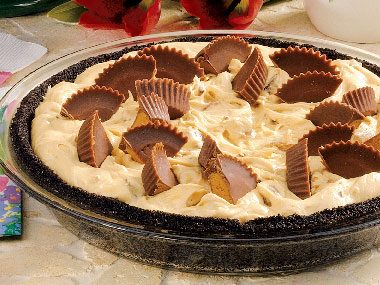
No-Bake Peanut Butter PieQuartered peanut butter cups top this rich smooth pie from Rhonda McDaniel of Rossville, Georgia. "It's always a hit at gatherings," she says. "It saves time, too, because it can be made in advance and frozen until needed."


Ingredients
2 packages (8 ounces each) cream cheese, softened
1 cup sugar
2/3 cup creamy peanut butter
2/3 cup whipped topping
14 peanut butter cups,divided
1 chocolate crumb crust (9 inches)

Directions
In a small bowl, beat the cream cheese, sugar and peanut butter until light and fluffy. Fold in whipped topping. Coarsely chop half of the peanut butter cups; stir into cream cheese mixture. Spoon into crust. Quarter remaining peanut butter cups; arrange over the top. Refrigerate for at least 4 hours before serving. Yield: 6-8 servings.

Tuesday, May 22, 2012

Health Confession: Do You Inhale Your Lunch?

Woman Eating Lunch at Desk
Yesterday, I managed to scarf down my lunch—a very delicious hummus and veggie sandwich from Cosi—in about 3.5 minutes. I was chewing so fast, I had to catch my breath afterward! Granted, it was an unusually packed day, but I find myself crossing off lunch like it’s a line item on my To Do list more often than not. And according to this new Lithuanian research, I really need to stop and savor my meals. The researchers learned that speed eaters were 2.5 times more likely to develop type 2 diabetes than people who ate more slowly. Other research has also linked eating fast with obesity. And proponents of mindful eating say that savoring each bite helps connect us to a sense of nourishment and well being. Old habits die hard, but this essay about embracing the French way of lunching—that is, taking at least a 30-minute lunch break away from your desk, and preferably outside—is inspiring me to make a change. Surely, I can manage to take a break one or two times a week—and author Rachael Levy says it will improve how I do my job: “The lunch break is a chance to refresh the mind and socialize with friends and co-workers. You’ve already been in class or work all morning, and you’re about to do it again all afternoon. By taking those few moments to breathe, you come out feeling refreshed and invigorated. At work, time spent chatting with colleagues can lead to great ideas and cross-pollination between departments. And if you’ve broken bread with colleagues at lunch, it’s going to be easier to approach them in the professional sphere.”

Friday, February 24, 2012

How Much Exercise Do I Really Need?

How Much Exercise Do I Really Need?
Most healthy people should aim for at least 30 minutes, five times a week, of moderately intense activity such as brisk walking, plus 10 to 15 minutes or so of strength-training (digging in your garden counts) 2 or 3 days a week. This is enough exercise to help you lower your risk for health conditions like high blood pressure, stroke, coronary artery disease, type 2 diabetes, colon cancer, and osteoporosis, and to prevent the natural loss of muscle mass that slows metabolism and contributes to weight gain in your thirties, forties, fifties, and beyond.

If you’re trying to lose weight, more activity is better. An hour or even 90 minutes of moderate exercise, or 1/2 hour of vigorous activity such as jogging, strenuous aerobics, or fast-paced cycling, is ideal. Of course, anything you do is better than nothing, and consistency counts. Fitting in 30 minutes most days of the week, even in 10-minute bursts, is better than playing the weekend warrior by overdoing it once or twice a week.

If you’re the type that just doesn’t enjoy going to the gym or using a treadmill, choose an activity you enjoy that you can do for 10 to 30 minutes or longer and that raises your heart rate. This could be dancing, playing tennis, chopping enough wood to heat your house for the winter, or lining up strenuous yard work or housework that feels like a workout.

Are Kettlebell Workouts a Shortcut to Fitness?

Could kettlebells really help you burn calories faster than conventional strength training programs? Fitness research suggests…

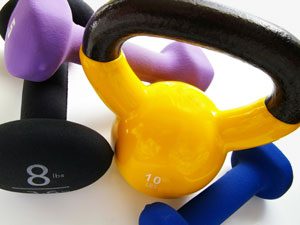
Kettlebells and Dumbbells
Working out with a kettlebell (a weight that resembles a cannonball with a handle attached to the top) burns more calories and builds strength faster than traditional strength training. Gyms across the country are adding kettlebell classes, and many personal trainers incorporate the weights into clients’ workouts — all with the promise of an outsize payoff.

The truth? New research suggests that kettlebells really may get you fitter faster. In a small study from the University of Wisconsin, La Crosse, seasoned exercisers burned nearly 300 calories in a 20-minute workout with the weights — significantly more than they would have with conventional strength training. To avoid back strain, start with a relatively light weight (8 pounds for women, 13 pounds for men).

ads